Wednesday, April 28, 2010
Say good bye to the nymphomaniac
Like Austen, the contemporary women novelist understands the power of language to both control and subvert the power of authority. Not only do irony and fantasy [myth] depend for their force upon a recognition of verbal constructions, but authors must maneuver around the language of dominant discourse in order to deconstruct cultural mythologies, including the myths that women construct about their lives...[and] inventing selves they can accept.
--- Nancy A. Walker, Feminist Alternatives: Irony and Fantasy in the Contemporary Novel by Women
Say good bye to the nymphomaniac, say good bye to the mad housewife, say goodbye to the suicidal woman, say good bye to the princess bride, say good bye to the evil stepmother, say good bye to the evil crone, say good bye to the neurotic woman, these are selves we can no longer accept. The Velvet Chamber is about to change all that.
Labels:
fairy-tales,
feminism,
myths
Monday, April 26, 2010
New Contributor: Persephone Vandegrift
An excerpt from her story The Perils of Metis:
She tried not to cry out as he placed his palms, freezing side up, over her breasts. She hated when he did it because it always sent a chill through her chest that would nearly stop her heart. The first time he did it, earlier in the year, she instinctively batted his hands away and then immediately regretted that decision as she watched him tower over her while raging at her to leave. And she did, with minimal pay, but when he requested her two weeks later offering to pay her double, she quickly learned how to deal with the coldness of his hands.
She would think of home.
She had spent most of the morning calculating what it would cost for a one way ticket and a taxi from the airport back to the farm; it was close to $1000. That meant only a few more nights like this with Zeus (not his real name). She did not know his real name. She did know about his unhappy wife and two children somewhere upstate, and that he was in shipping and receiving, but by the bundles of cash he carried, she guessed he received more than he shipped. She had nicknamed him Zeus because of his dark skin, white teeth, and his Italian or Greek accent; she did not know how to tell the difference. It was also something she had remembered from school; Zeus was some kind of a god who controlled all the other gods. And that is what her Zeus did, controlled many things and many people, especially in restaurants where every maƮtre'd knew who he was by sight, but would never admit to his being there.
Of course her parents would not know she was coming back. Her mother would forgive her for not writing or calling. She would explain how hard it was to get started in a new city with roommates sneaking out and the piles of bills left behind, leaving out the part about the mediocre office jobs that could not pay as high as entertaining someone for one night. She could easily create some benign employment as easily as it was to spread her legs for money. It was not like she was giving these men her heart. That had always been reserved for the one; the one she was going to meet after she got out of the city – the tarot reader had assured her. She was so close to it, so close she could smell the dirt driveway she had fled down ten years ago with her father’s voice still ringing in her ears to "get out of this house! Now! Whore, get out!"
The words were so clear she thought her father was standing in the room. She stopped for a moment; her heart beating frantically against her chest. She had not thought about that particular memory in a long time, convincing herself that she had somehow rendered it irretrievable. In the midst of Zeus' freezing touch, she tried to shove that memory to the back of her mind, but it would not go. It ended up distracting her so much that Zeus let out a frustrated grunt and wedged both of his hands into her hips to keep her in motion. She had to oblige; there was never any other choice.
Persephone Vandegrift currently resides in Seattle, Washington. Fond of all things mythological, her adaptation of The Bacchae of Euripides, Revenge and Sorrow in Thebes, had its debut in the summer of 2009 at Stone Soup Theatre, and was named one of the top six most memorable theatre moments of 2009 by the Seattle Weekly. Most recently she has been published in Lavanderia: A Mixture of Women, Wash, and Word, and was nominated for a Pushcart for her short story, "Dream Baby, Dream" which was included in Notes and Grace Notes Anthology, Root Exposure. Other mythological and historical work can be found via Megalithic Poetry and The Copperfield Review. She is Poetry Editor for Notes and Grace Notes and is hoping to finish a compilation of poetry, flash fiction, and short stories inspired by mythology.
She tried not to cry out as he placed his palms, freezing side up, over her breasts. She hated when he did it because it always sent a chill through her chest that would nearly stop her heart. The first time he did it, earlier in the year, she instinctively batted his hands away and then immediately regretted that decision as she watched him tower over her while raging at her to leave. And she did, with minimal pay, but when he requested her two weeks later offering to pay her double, she quickly learned how to deal with the coldness of his hands.
She would think of home.
She had spent most of the morning calculating what it would cost for a one way ticket and a taxi from the airport back to the farm; it was close to $1000. That meant only a few more nights like this with Zeus (not his real name). She did not know his real name. She did know about his unhappy wife and two children somewhere upstate, and that he was in shipping and receiving, but by the bundles of cash he carried, she guessed he received more than he shipped. She had nicknamed him Zeus because of his dark skin, white teeth, and his Italian or Greek accent; she did not know how to tell the difference. It was also something she had remembered from school; Zeus was some kind of a god who controlled all the other gods. And that is what her Zeus did, controlled many things and many people, especially in restaurants where every maƮtre'd knew who he was by sight, but would never admit to his being there.
Of course her parents would not know she was coming back. Her mother would forgive her for not writing or calling. She would explain how hard it was to get started in a new city with roommates sneaking out and the piles of bills left behind, leaving out the part about the mediocre office jobs that could not pay as high as entertaining someone for one night. She could easily create some benign employment as easily as it was to spread her legs for money. It was not like she was giving these men her heart. That had always been reserved for the one; the one she was going to meet after she got out of the city – the tarot reader had assured her. She was so close to it, so close she could smell the dirt driveway she had fled down ten years ago with her father’s voice still ringing in her ears to "get out of this house! Now! Whore, get out!"
The words were so clear she thought her father was standing in the room. She stopped for a moment; her heart beating frantically against her chest. She had not thought about that particular memory in a long time, convincing herself that she had somehow rendered it irretrievable. In the midst of Zeus' freezing touch, she tried to shove that memory to the back of her mind, but it would not go. It ended up distracting her so much that Zeus let out a frustrated grunt and wedged both of his hands into her hips to keep her in motion. She had to oblige; there was never any other choice.
* * * *
Labels:
fairy-tales,
feminism,
myths
Sunday, April 25, 2010
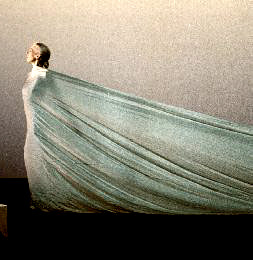
I am the luminous moon
Christine Sang during a performance of Robert Wilson and Philip Glass' Monsters of Grace, a story set to Rumi:
Sang describes her character:
"I am the luminous moon. A lover is looking up at me."
Labels:
fairy-tales,
feminism,
myths
Wednesday, April 21, 2010
True story
"Jungian psychoanalysis tends to assume that archetypal patterns derived from male experience are applicable to women's as well. As a consequence, female archetypes are interpreted according to male patterns, and the male patterns may be allowed to eclipse women's experience altogether."
--- Annis Pratt, Feminist Archetypal Theory
So if you've ever wondered why its impossible to escape the Madonna/whore dichotomy, look no further. Not to mention the bimbo, the whore with the heart of gold, the hag, the witch, the spinster, and the princess. When writers begin to interpret female archetypes according to female experience, worlds will collide, and one dimensional women will cease to exist. Real women not only have curves, but the capability of being sluts and mothers, grandmothers and whores, princesses and queens, all at the same time.
--- Annis Pratt, Feminist Archetypal Theory
So if you've ever wondered why its impossible to escape the Madonna/whore dichotomy, look no further. Not to mention the bimbo, the whore with the heart of gold, the hag, the witch, the spinster, and the princess. When writers begin to interpret female archetypes according to female experience, worlds will collide, and one dimensional women will cease to exist. Real women not only have curves, but the capability of being sluts and mothers, grandmothers and whores, princesses and queens, all at the same time.
Labels:
fairy-tales,
feminism,
myths
Bitch, don't drop that stitch
The women's inner evaluation of herself swings back and forth between two extremes and reflects the polarized image of women that society offers. As many scholars have noted, images of women in the media as well as fairy tales and religious stories tend to be extreme rather than balanced, fragmented rather than holistic.
--- Demaris S. Wehr, Feminist Archetypal Theory: Interdisciplinary Re-Revisions of Jungian Thought.
Labels:
fairy-tales,
feminism,
myths
Sunday, April 11, 2010
I am Snow White: Part 5
Read Parts 1-4
I ran out of the chapel, down the grassy hill, underneath the stars and the moon. I ran from the vision of the dead princess. I ran so fast I tripped over my skirts, falling flat on my face, tasting blood. I did not like the girl. I did not like Snow White, but I did not want to see her dead. Soon I was at her door, out of breath, panting. It was locked. When I could finally speak, I said, firmly,
"Snow White, open this door immediately "
No answer. I knocked harder;
"Open this door. Snow White! Do you hear me? I know you are awake! And you must be a good girl, and open your door. Please! I will not have sorcery. You know what I must do now, don't you? Do you know? I shall tell you. I must burn the chapel to the ground. The mirror is--- unholy. Now open this door!"
I remember that I had started to cry at this point, that I tasted more blood in my mouth, but this could've been bitterness as well. In times past, oh not so long ago, I would have been entwined in linen sheets with my lover. Blissfully free of the Duke who had begat a child with his sister. More blasphemy. Oh, I could not bear it. This must end. I knocked harder and harder, I screamed:
"Open this door---"
--- suddenly it flew open, as if pushed by the wind or an unseen hand. I saw Snow White in the farthest corner of her room; by the south window, in a puddle of moonlight. She was dancing as if possessed; her black hair coiling down her back and around her face. What had suddenly descended upon my castle? I shivered involuntarily, sat down on a brocade chair, legs shaking, and watched her. I was numb. I could think of nothing else to do. At least she is still breathing, I remember thinking, and not a pretty corpse. After a few minutes, exhaustion setting in, I tried again,
Snow White," I whispered, for I was now frightened of her. Who was she really?
"Snow White," I said again, a bit louder, "You must answer me."
She stopped suddenly, facing the window, her arms still high over her head, as if plucking invisible fruit from a tree. She turned slowly, blood trickling from her mouth.
"I am Snow White," she said, "and you have poisoned me."
"Little girl," I said, firmly, kindly, "You are dreaming. No one has poisoned you. You live a good life here. Now get back into bed. How did you cut yourself?"
Still, I couldn't help but notice that her wound was the same as mine. I fell--- what happened to her?
I led her to her marble wash basin, "Never mind," I said, wiping her mouth with cool water, and patting it dry, "we can discuss it in the morning. But now you shall go back to bed."
She replied, "But, I'm not awake."
I met her gaze, she wavered a bit, caught between the two, waking and dreaming--- so I repeated more firmly,
"That's right. This is only a dream. Now, come."
I led her towards her bed and as I did, she collapsed int my arms in a dead faint. I carried her and lay her down, covered her with wool blankets, and drew the velvet curtains. I looked back at her, so still now--- but no, I mustn't think of that, I mustn't think of the dead princess. I must think of a way to save her and myself. I rang Esmerelda for a pot of tea, and while she grumbled and complained, I said, almost shouting:
"I have work to do. I will not have this child, I will not have sorcery. I will not have it. I will divest myself!"
She scurried away, frightened, and no doubt sure I had gone mad. But my purpose could not have been clearer. I sat at my writing desk and began my letter to the Queen's Solicitor:
"Do not stop to rest or eat. This must get to the Queen in two days. Do you understand?"
He nodded balefully, snatched the letter from my hands, jumped upon his horse, and soon disappeared into the woods. I knew two days was impossible, but not four. The girl will be gone in a fortnight. Or less. And then I would destroy the chapel, just as I had said. I had no use for magic. Sorcery. I saw what had happened to my grand-mere. They will burn it out of you. Better for the girl to be in the convent, better for me to be free.
I looked up at the sky, just beginning to grow light. A wood thrush trilled, the song echoing through the trees. Real and true. This world is real and true, I had to reassure myself, again and again. I pulled my cloak tight around my neck. At that moment, Harry appeared in the pale light;
"Oh," I said, "you startled me."
"Why did you send me away," he asked, holding up my letter to him, "was I not a good man for you?"
I smiled, in spite of myself, "Very good. Most excellent."
"And," he continued, "was I not your lover who adored every inch of your body?
"It's the girl, Harry. Snow White. The Duke's bastard child. Perhaps insane, perhaps a bit of a witch as well."
He frowned, "Then best for her to disappear. Most witches end on the cross, their hands and feet on fire. It's not a pretty sight."
"No, it is not." I did not tell him about my mother's mother.
"But even a witch," he said, smiling, "could not find us in the stables."
"I am the Duchess," I replied, relieved to be speaking of something else, "I cannot be bedded in a stable. But soon, very soon, we shall be lovers again. I've asked to have her removed, perhaps back to the convent."
"Then I shall impatiently await her Ladyship's summons," he replied smiling, and left.
In the days that followed I was very kind to the girl, solicitous, almost loving. Not surprisingly she had no memory of that night. I did not press it. She was fragile enough. I could almost feel sorry for her. Of course, I was haunted by the vision in the chapel, how could I forget? Nothing, I admit here, was ever the same again. Yet in those days, I did my best to dismiss it, as one dismisses a shadow---
Indeed at times I was convinced I could be strong, very strong, and fight off anything that dared cross me, be it man or the devil himself. Then on some evenings I gave up all pretense of strength: the young girl in my charge was undoubtedly exceedingly strange, and quite possibly evil herself. And in my blackest hour, I believed that I too might be insane, or dreaming. On those nights, I wandered the grove with a flagon of red wine, almost daring the darkness to come upon me; a ghost, a witch, a devil. Yet nothing happened.
One afternoon, as I escorted her from her French tutor to tea in the main salon, she turned to me, and said,
"You did not poison me."
I stopped to look at her, and in this light, framed by gilt doorway, she appeared as all little girls--- in a velvet riding jacket, white ribbons in her hair, her face, all fresh and shining. Guilt assailed me;
"Of course I did not."
I took her hand again, but she shrugged me off, and continued,
"My mother poisoned me."
"Snow White, you musn't tell lies----"
I tried to grab her hand again, but she stepped back. Now we faced off in the long, low hallway, soft light shining through the stained glass. She continued,
"And she's reading your letter now. The one about me. And her Highness is not pleased."
"Why are you telling me all this now?"
"Shhhhh," she said, straining to hear, eyes wide with terror.
"What?," I asked, glancing over my shoulder.
She crept over to the main staircase, whispered, "So fast! The horse is so fast!"
Without thinking, I asked, "Are you a witch?"
"They're coming," she said sadly, turning back to face me, "and I am Snow White."
I ran out of the chapel, down the grassy hill, underneath the stars and the moon. I ran from the vision of the dead princess. I ran so fast I tripped over my skirts, falling flat on my face, tasting blood. I did not like the girl. I did not like Snow White, but I did not want to see her dead. Soon I was at her door, out of breath, panting. It was locked. When I could finally speak, I said, firmly,
"Snow White, open this door immediately "
No answer. I knocked harder;
"Open this door. Snow White! Do you hear me? I know you are awake! And you must be a good girl, and open your door. Please! I will not have sorcery. You know what I must do now, don't you? Do you know? I shall tell you. I must burn the chapel to the ground. The mirror is--- unholy. Now open this door!"
I remember that I had started to cry at this point, that I tasted more blood in my mouth, but this could've been bitterness as well. In times past, oh not so long ago, I would have been entwined in linen sheets with my lover. Blissfully free of the Duke who had begat a child with his sister. More blasphemy. Oh, I could not bear it. This must end. I knocked harder and harder, I screamed:
"Open this door---"
--- suddenly it flew open, as if pushed by the wind or an unseen hand. I saw Snow White in the farthest corner of her room; by the south window, in a puddle of moonlight. She was dancing as if possessed; her black hair coiling down her back and around her face. What had suddenly descended upon my castle? I shivered involuntarily, sat down on a brocade chair, legs shaking, and watched her. I was numb. I could think of nothing else to do. At least she is still breathing, I remember thinking, and not a pretty corpse. After a few minutes, exhaustion setting in, I tried again,
Snow White," I whispered, for I was now frightened of her. Who was she really?
"Snow White," I said again, a bit louder, "You must answer me."
She stopped suddenly, facing the window, her arms still high over her head, as if plucking invisible fruit from a tree. She turned slowly, blood trickling from her mouth.
"I am Snow White," she said, "and you have poisoned me."
"Little girl," I said, firmly, kindly, "You are dreaming. No one has poisoned you. You live a good life here. Now get back into bed. How did you cut yourself?"
Still, I couldn't help but notice that her wound was the same as mine. I fell--- what happened to her?
I led her to her marble wash basin, "Never mind," I said, wiping her mouth with cool water, and patting it dry, "we can discuss it in the morning. But now you shall go back to bed."
She replied, "But, I'm not awake."
I met her gaze, she wavered a bit, caught between the two, waking and dreaming--- so I repeated more firmly,
"That's right. This is only a dream. Now, come."
I led her towards her bed and as I did, she collapsed int my arms in a dead faint. I carried her and lay her down, covered her with wool blankets, and drew the velvet curtains. I looked back at her, so still now--- but no, I mustn't think of that, I mustn't think of the dead princess. I must think of a way to save her and myself. I rang Esmerelda for a pot of tea, and while she grumbled and complained, I said, almost shouting:
"I have work to do. I will not have this child, I will not have sorcery. I will not have it. I will divest myself!"
She scurried away, frightened, and no doubt sure I had gone mad. But my purpose could not have been clearer. I sat at my writing desk and began my letter to the Queen's Solicitor:
Dear Sir:
The bastard child you sent to live with me is quite insane, and is beyond my capabilities to heal or soothe her. She needs more than a governess and tutors for poetry, French and mathematics. No man will ever marry her despite her titled lineage. And you must know this. And the Queen must know this as well. She is my charge for the rest of my natural life, is this not so?
If this be the case, you must admit your trickery. Surely you knew of the girl's condition; her mind unhinged whether from magic or the devil, I do not know. Surely this is something the Queen herself must have observed, despite hiding her in a convent.
In short, the Queen Mother needs to decide upon another alternative for her care. It shan't be me. In the best interests of the child, I suggest she return to her former domicile, the Abbey of St. Joan--- and there in the hands of God, she will be safe.
Most respectfully, The Grand DuchessI sealed it, and sent for my courier,
"Do not stop to rest or eat. This must get to the Queen in two days. Do you understand?"
He nodded balefully, snatched the letter from my hands, jumped upon his horse, and soon disappeared into the woods. I knew two days was impossible, but not four. The girl will be gone in a fortnight. Or less. And then I would destroy the chapel, just as I had said. I had no use for magic. Sorcery. I saw what had happened to my grand-mere. They will burn it out of you. Better for the girl to be in the convent, better for me to be free.
I looked up at the sky, just beginning to grow light. A wood thrush trilled, the song echoing through the trees. Real and true. This world is real and true, I had to reassure myself, again and again. I pulled my cloak tight around my neck. At that moment, Harry appeared in the pale light;
"Oh," I said, "you startled me."
"Why did you send me away," he asked, holding up my letter to him, "was I not a good man for you?"
I smiled, in spite of myself, "Very good. Most excellent."
"And," he continued, "was I not your lover who adored every inch of your body?
"It's the girl, Harry. Snow White. The Duke's bastard child. Perhaps insane, perhaps a bit of a witch as well."
He frowned, "Then best for her to disappear. Most witches end on the cross, their hands and feet on fire. It's not a pretty sight."
"No, it is not." I did not tell him about my mother's mother.
"But even a witch," he said, smiling, "could not find us in the stables."
"I am the Duchess," I replied, relieved to be speaking of something else, "I cannot be bedded in a stable. But soon, very soon, we shall be lovers again. I've asked to have her removed, perhaps back to the convent."
"Then I shall impatiently await her Ladyship's summons," he replied smiling, and left.
In the days that followed I was very kind to the girl, solicitous, almost loving. Not surprisingly she had no memory of that night. I did not press it. She was fragile enough. I could almost feel sorry for her. Of course, I was haunted by the vision in the chapel, how could I forget? Nothing, I admit here, was ever the same again. Yet in those days, I did my best to dismiss it, as one dismisses a shadow---
Indeed at times I was convinced I could be strong, very strong, and fight off anything that dared cross me, be it man or the devil himself. Then on some evenings I gave up all pretense of strength: the young girl in my charge was undoubtedly exceedingly strange, and quite possibly evil herself. And in my blackest hour, I believed that I too might be insane, or dreaming. On those nights, I wandered the grove with a flagon of red wine, almost daring the darkness to come upon me; a ghost, a witch, a devil. Yet nothing happened.
One afternoon, as I escorted her from her French tutor to tea in the main salon, she turned to me, and said,
"You did not poison me."
I stopped to look at her, and in this light, framed by gilt doorway, she appeared as all little girls--- in a velvet riding jacket, white ribbons in her hair, her face, all fresh and shining. Guilt assailed me;
"Of course I did not."
I took her hand again, but she shrugged me off, and continued,
"My mother poisoned me."
"Snow White, you musn't tell lies----"
I tried to grab her hand again, but she stepped back. Now we faced off in the long, low hallway, soft light shining through the stained glass. She continued,
"And she's reading your letter now. The one about me. And her Highness is not pleased."
"Why are you telling me all this now?"
"Shhhhh," she said, straining to hear, eyes wide with terror.
"What?," I asked, glancing over my shoulder.
She crept over to the main staircase, whispered, "So fast! The horse is so fast!"
Without thinking, I asked, "Are you a witch?"
"They're coming," she said sadly, turning back to face me, "and I am Snow White."
Labels:
fairy-tales,
feminism,
myths
Subscribe to:
Posts (Atom)